- Please wait...
Writing in the Times this autumn, Y TREE founder and CEO Stuart Cash made the point that investment, entrepreneurship and ambition are “three things necessary for the growth the UK so badly needs.”
As it happens, these three qualities are found – in abundance – in an area that, as a wine writer, I know pretty well: the English wine industry.
Just look at the ambition of Mark Driver, a financier who stepped down from Horseman Capital Management in 2009 and boldly decided to found an English wine estate, Rathfinny, spending £5m on an arable farm on the South Downs in Sussex and millions more planting hundreds of thousands of vines and building a state-of-the-art winery. Or at the vision and determination of Bob Lindo, a former RAF pilot who broke his spine ejecting from a Jet Provost when it collided with another plane in the skies above North Yorkshire. Lindo went on to reinvent himself as one of the pioneers of the modern English wine industry, establishing Camel Valley in Cornwall in the late eighties, when the phrase English wine was still an oxymoron.
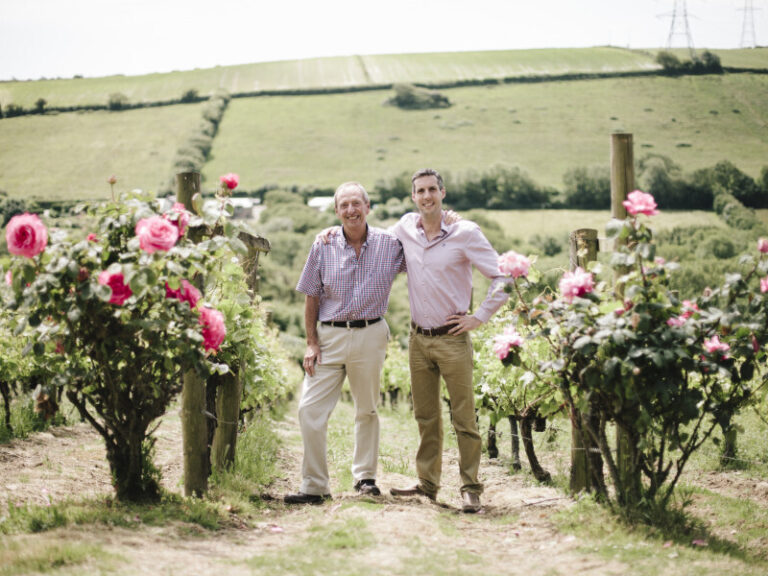
The progress of English wine to date is one of the brightest success stories of the last two decades. Britain now has 238 wineries and 4,841ha of land under vine; in size, its vineyard is comparable (just a bit smaller) to that of Chablis in France. Its sparkling wines have beaten those from over-the-Channel rival Champagne in multiple blind tastings. The quality potential has attracted world-class players, like Champagne Taittinger and Jackson Family Wines, which is headquartered in California and has vineyards around the globe. Essex, home of Basildon Man and the world’s longest pier, is causing such a stir for the quality of its still chardonnay and pinot noir that two highly-regarded Burgundy producers, Alex Moreau and Pierre Duroché, were lured over here to make their own wine from the 2025 vintage.
But, much like the wider economy, English wine now finds itself at a challenging – some might say defining – point. Market conditions are tough. Worldwide consumption of alcohol is falling and the squeeze on personal finances means households have less money for discretionary spending. In September, Ridgeview, a family business founded in 1995 and one of English wine’s best-known names, went into administration, just five years after opening a new £1.8m winery that it had built to double its capacity. Other producers are retrenching: Chapel Down, one of England’s biggest wine producers, reported a pre-tax loss of £687,000 for the first half of 2025 and at the same time announced it had shelved plans for a new £32m winery, citing planning delays that forced a review [of] “alternative options to support increased winemaking production capacity in the medium-term.”
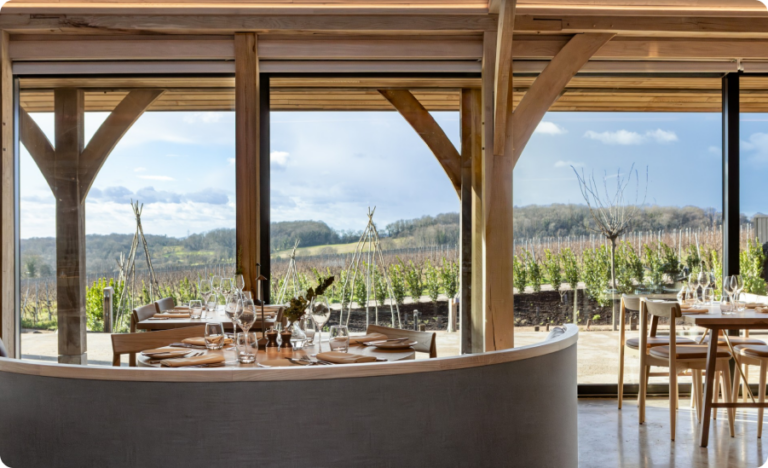
A key issue for English wine producers now and over the next few years will be the balance of supply and demand. Some commentators have been warning for some time that planting has been too optimistic. The number of hectares under vine has risen more than 500% since 2005 and, because it takes three years for a planted vine to give a decent harvest, about one fifth – 982ha – of the total are yet to come on stream, according to figures published by Wine GB, the industry body.
That’s a hefty supply bump on the horizon and surmounting it will require a commensurate growth in sales. Last year, sales of English still wine did lift by 10%, but still wine represents only one third of production (roughly). Sales of English sparkling were flat. In the current climate, that’s actually something of a triumph: Champagne shipments to the UK dropped 12.7% in 2024. But it’s clear that, if sales cannot grow, some producers could end up with a lot of stock in their cellars, particularly after a high-yielding year.
Rob Symington, who chairs the board of Hambledon Wine Estate, the Hampshire producer acquired by Symington Family Estates and Berry Bros & Rudd two years ago, takes a phlegmatic approach to the issue.
“The gallows joke that people make often in wine is how long it takes to make money out of any wine project. We don’t have bottomless pockets but we did go into this with our eyes open. We expected that production was going to grow faster than demand and we knew that, when you have more supply in any market, typically, you see more aggression on price and discounting.”
The strategy for Hambledon, says Symington, “Isn’t to play mass market volume discounting, bigger is better. The strategy is better is better.” The projection is that Hambledon will “break even, cash-wise, in 2028.”
It often surprises those outside the wine business that some of its biggest names are not in profit. Nyetimber, probably the best-known of all English wine producers, being a case in point. Rathfinny was also amongst those to report an operating loss in its latest annual report.
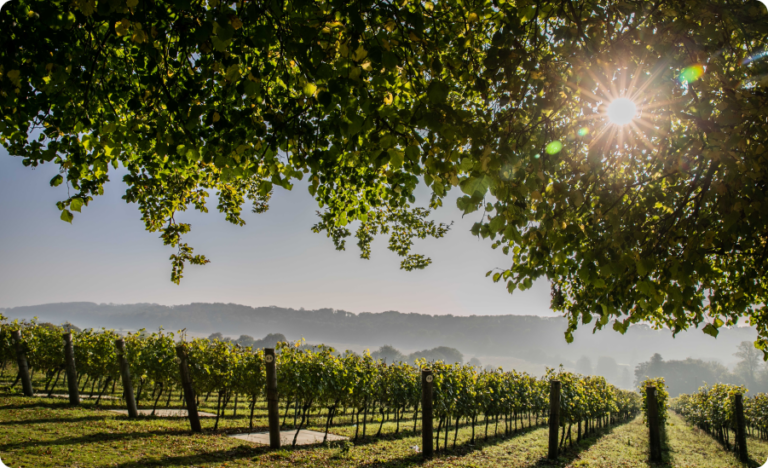
One English wine producer “making a healthy profit” according to its co-owner Charles Simpson is Simpsons’ Wine Estate in Kent. Charles and his wife Ruth already owned an estate in southern France when they began making wine in England and have focused keenly on export. For English wine, generally, export stands at a mere 9% (up 35% year on year). For the Simpsons, it’s higher. They’ve had huge success in Norway where their Chablis-esque Gravel Castle Chardonnay is the number one best-selling English wine and so popular they had to plant another chardonnay vineyard to make more of it.
For those who choose to invest in English wine, there is often an emotional element running alongside the careful calculations that come with the decision. Rob Symington, whose family makes port and other wines in Portugal, puts it like this. “My family originated from Scotland/England. If we were ever going to make wine outside Portugal, which is where we’ve built our business over five generations, England would make sense for the obvious reasons of historical and family ties.”
While chef Angela Hartnett, explaining her decision to invest in Sugrue South Downs this autumn, reportedly said, “I instantly fell in love with Dermot [Sugrue] and [his wife] Ana’s enthusiasm for life and their delicious wines – I didn’t take much convincing.” The key phrase here is “delicious wines.” English wine may be entering its most testing chapter yet but it goes into it on a tremendous wave of support and admiration.
Step by careful step, the wines have been making their way on to the world stage. British Airways now pours English sparkling in its First Class Cabins. English wine is also poured at Ascot and government hospitality events. It would have been shocking if English wine hadn’t been served at the state banquet for Trump at Windsor Castle in September 2025. The quality is there and the ambition is clear. The question now is whether the tremendous wave of support, entrepreneurship and investment can continue to flow?
